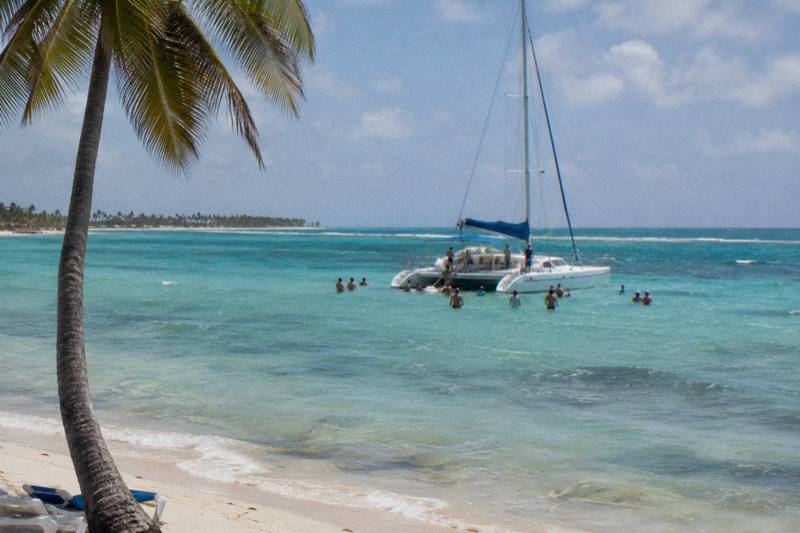
Sargassum And Sea Conditions For Punta Cana Boat Trips
Sargassum is the single most asked-about sea condition for Punta Cana boat trips, and the honest answer is seasonal: the Atlantic-facing beaches around Bavaro and Punta Cana see the most weed from roughly April through October, while boat trips keep running and operators route around it.
Short answer
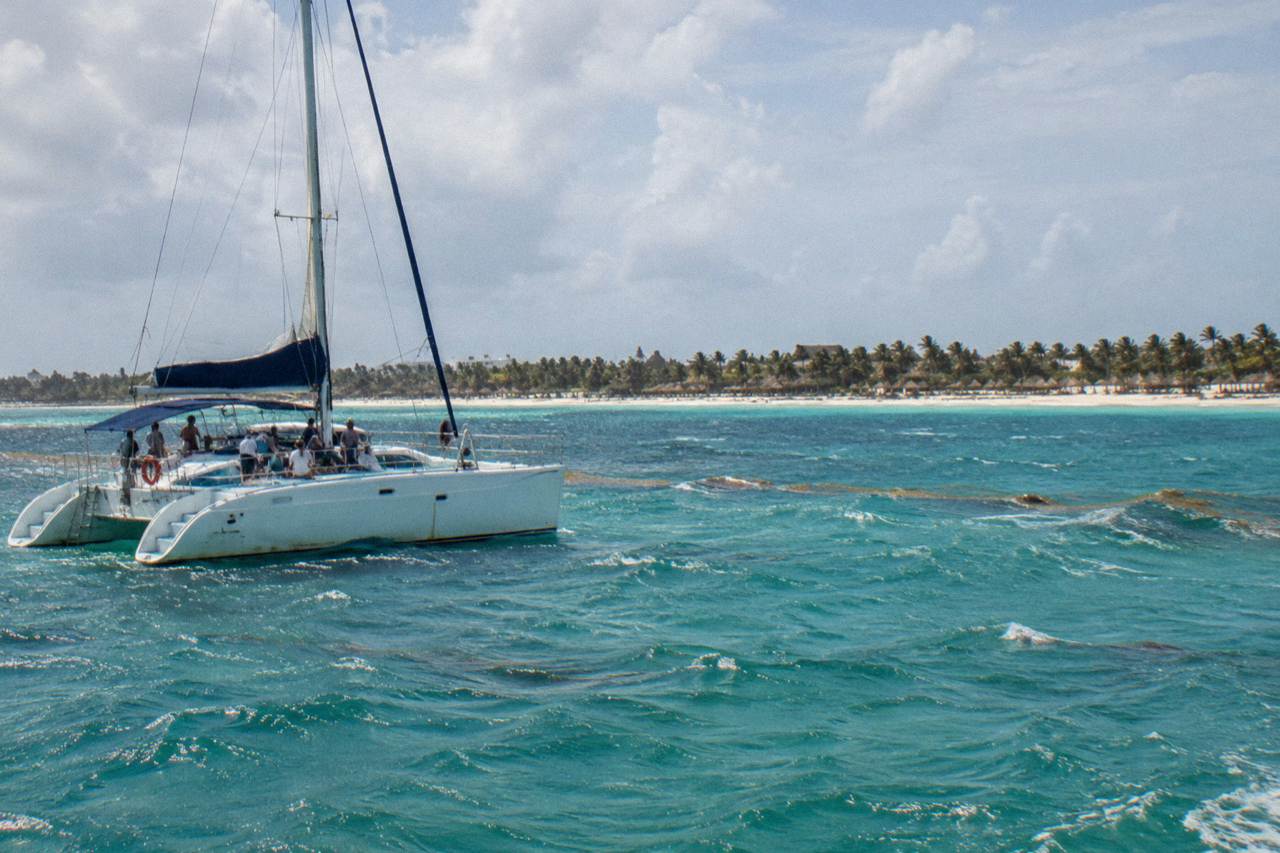
Sargassum typically affects the east-facing Atlantic coast of Punta Cana and Bavaro from around April or May through October, with the heaviest arrivals usually between May and August. Boat trips generally keep operating: the natural pool, reef snorkel stops and Saona crossings sit in water where floating weed matters less than on the beach itself.
The east coast of the Dominican Republic faces the open Atlantic, and every year floating sargassum weed drifts westward with the currents toward Punta Cana, Bavaro and Macao. For anyone booking a party boat, a catamaran or a Saona Island day trip, the question is practical rather than academic: will there be seaweed on the day, and does it actually change the trip. The five-language party catamaran runs the Bavaro coastline, the small-group Happy Fish catamaran visits a snorkel reserve near Cabo Engaño, and the Saona full-day crossings leave from the more sheltered Caribbean side at Bayahibe. All three are booked year-round, weed or no weed. Sea conditions matter at dusk too, and if you're wondering whether the sun actually sets over the water here, our guide to sunset viewing on Punta Cana's east-facing coast explains what to expect and which evening boat trips run.
This guide lays out what verified monitoring actually says about the seaweed cycle, how the season maps onto the calendar, which departure areas sit most and least exposed, and what happens when the sea state forces an operator to cancel.
What Is Sargassum And Why Does It Reach Punta Cana?
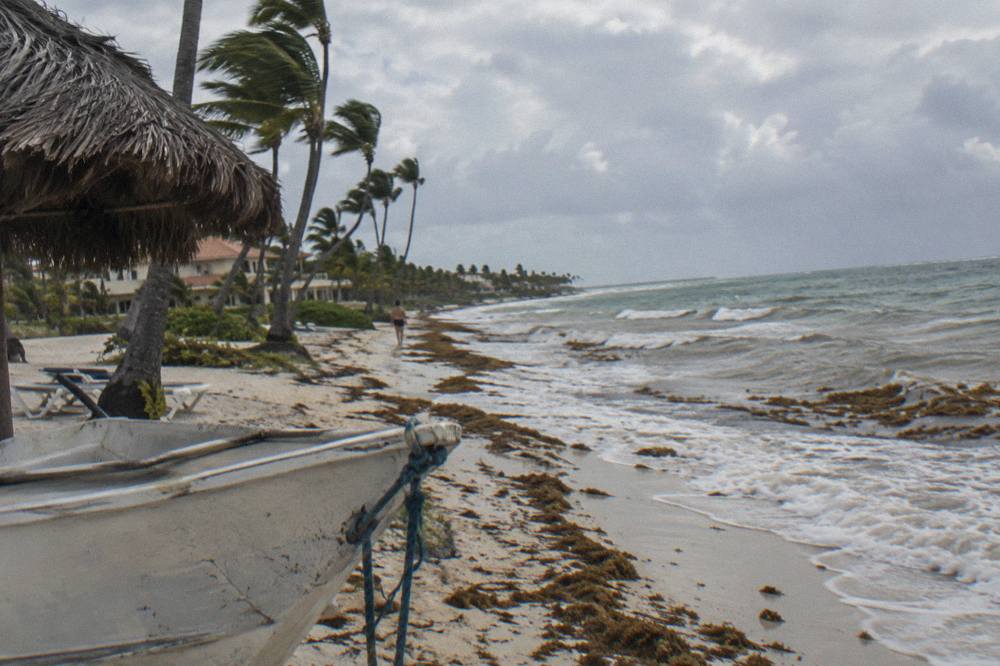
Sargassum is a brown floating seaweed that drifts in large mats across the tropical Atlantic, and the trade winds and currents push it toward the Caribbean each year. Punta Cana and Bavaro sit on an east-facing Atlantic shore, so arriving weed lands there first and in the largest volumes, while the south-facing coast near Bayahibe and Saona Island is more sheltered from the worst of it.
It is a natural, open-ocean phenomenon, not pollution. The mats form in the Sargasso Sea and the equatorial Atlantic and ride the currents westward in what researchers call the Great Atlantic Sargassum Belt. The USF Optical Oceanography Lab, whose Sargassum Watch System tracks the belt by satellite, reported that in September 2026 sargassum amounts continued to decline in almost every region, as expected for the time of year, but remained relatively high compared with previous years for the same month. In plain terms: 2026 has been a heavy year, the seasonal decline was underway by autumn, and no forecast can promise weed-free water on any given date.
For a boat trip, the distinction that matters is between the beach and the water you actually sail on. Sargassum piles up at the shoreline, where resorts rake it and barriers catch some of it. A catamaran cruising the coast, a reef snorkel stop or a waist-deep natural pool an offshore sandbar can be clear even on a day when the beach behind the marina has a brown line of weed. Operators on current listings say exactly that: routes reach open water or specific stops where beach sargassum does not directly touch the experience.
When Is Sargassum Season In Punta Cana?
The seaweed season on the Punta Cana and Bavaro Atlantic coast typically runs from around April or May through October, with the heaviest accumulation usually between May and August. By late September and October the arrivals thin out, and from November through March the coast is normally in its low season for sargassum. If seaweed is only one piece of your timing puzzle, our month by month guide to the worst time to visit Punta Cana weighs rain and storm risk alongside the sargassum calendar.
Listing monitoring and seasonal reporting describe October as the tail end of the season, with active resort cleanup still underway. The pattern repeats most years rather than holding to fixed dates: wind direction shifts the weed along the coast within hours, so one beach can carry a line of it while a bay a few minutes away by boat is clean. That day-to-day variability is the reason no honest page can promise a weed-free week in June or a guarantee of clear water in February.
If your dates are flexible and the boat day is the priority, the shoulder and dry months are the calmer bet for water clarity. If your dates are fixed in summer, the better question is which trip format tolerates weed best, and the answer is usually the ones that spend their time offshore: the reef and sandbar stops on the open-air catamaran party boat, or the full-day Saona crossings that leave the Atlantic coast behind entirely.
How the season maps onto trip planning:
| Period | Typical sargassum picture on the Atlantic coast | What it means for boat trips |
|---|---|---|
| November to March | Low season for arriving weed; cooler, drier months | Widest choice of stops, clearest inshore water |
| April to May | Season begins; arrivals become intermittent | Trips run normally, occasional rerouted stops |
| June to August | Peak accumulation on east-facing beaches | Offshore formats shine; natural pool stops still run |
| September to October | Season tapers, as in autumn 2026 reporting | Good late-season value, some residual weed |
Booking timing matters less than people assume, because nearly every trip below comes with free cancellation. The adults-only open-bar party boat, the 4.6-rated hip hop cruise with 1,888 reviews, the $54 open-air catamaran: all of them list free cancellation on the operator's page. Lock the date early if you want a seat in peak weeks, and watch the sea in the days before rather than trying to guess it months ahead.
Do Boat Trips Still Run When There Is Seaweed?
Yes. Party boats and catamarans in Punta Cana operate year-round, including through the sargassum season, because their snorkel reefs, natural pools and sandbar stops sit offshore where floating weed matters less than on the beach. Operators describe rerouting or adjusting stops when a patch drifts over a site, and current listings keep running through October. Since most of these catamarans and party boats push off from Bavaro Beach, the guide to Bavaro Beach's water, crowds, and departure spots tells you exactly what to expect before you board.
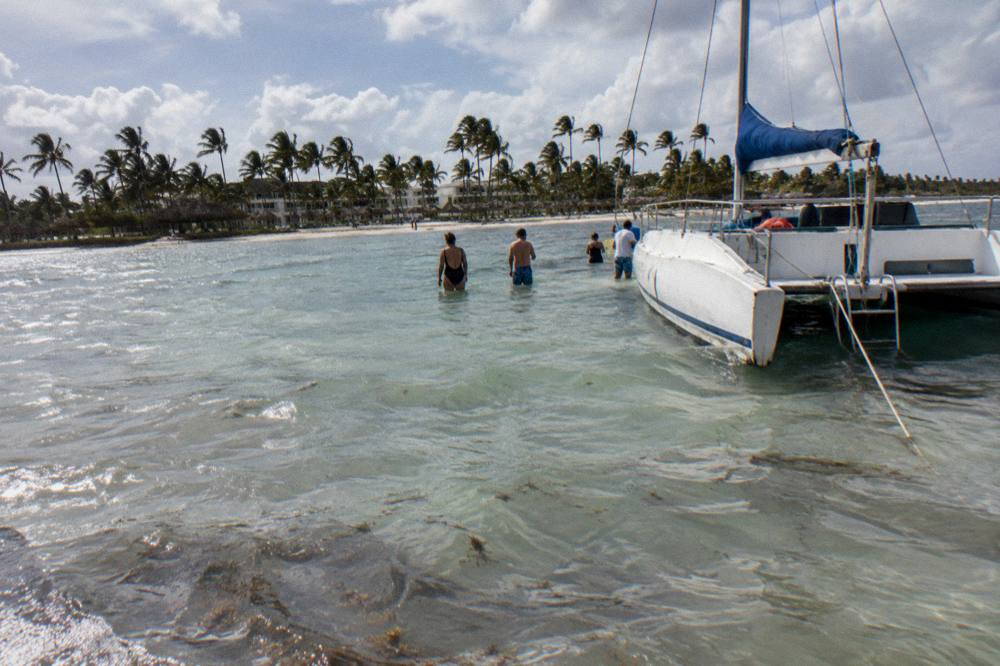
The mechanics are simple. Sargassum floats, so it concentrates along the shoreline and in windlines rather than evenly across the sea. A crew that planned a stop at one section of the natural pool can move to another; a snorkel guide can shift to the leeward side of the reef. None of this is guaranteed on any single day, which is why tour descriptions frame stops as weather-and-conditions dependent: the Punta Cana party boat with open bar notes its snorkeling runs "if weather conditions allow it", and that wording shows up on trip after trip here rather than being a red flag.
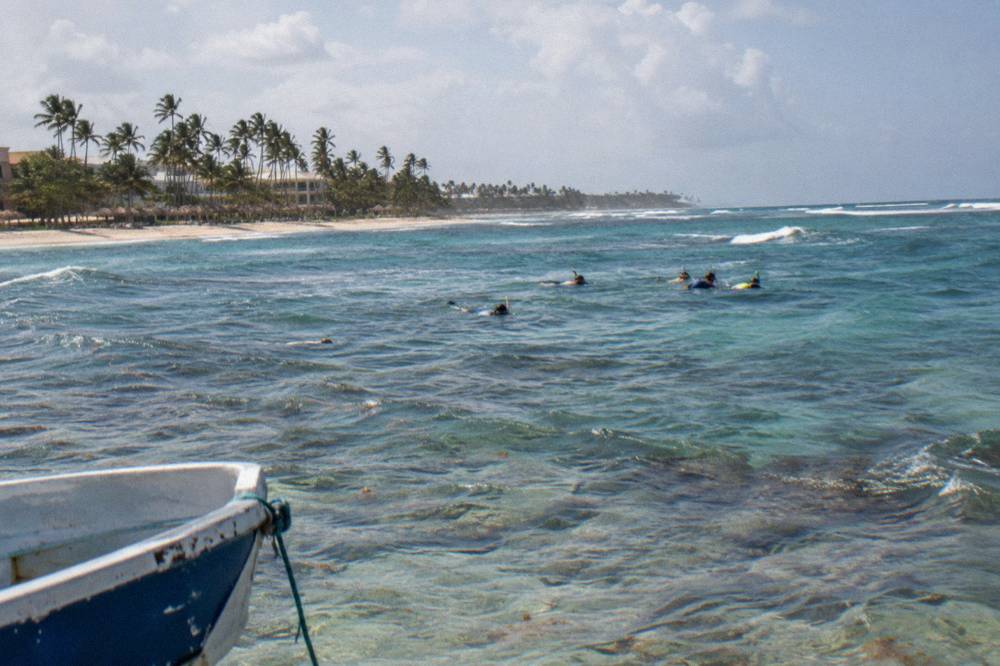
The most seaweed-tolerant format is arguably the full-day Saona trip. Those tours transfer by road to Bayahibe on the Caribbean side and cross to the island from there, leaving the exposed Atlantic beaches behind. The most reviewed trip here is a Saona day: the catamaran and speedboat run with buffet lunch, 4.4 from 4,767 reviews, from $71.20 per person, with a 30-minute stop at the natural swimming pool and three hours on the island. When weed reports are bad, Bayahibe-departing trips are the ones travelers switch to.
The five-language party catamaran that anchors this site's season coverage, from $60 per person with open bar and hotel pickup from Punta Cana, Bavaro, Uvero Alto, Cabeza de Toro and Cap Cana, is a good middle path: it runs the Bavaro coast with a natural pool and sandbar stop, so it spends most of its 4 hours offshore. Check availability alongside the fuller tour page.
Which Areas Are Most Affected, Bavaro, Cap Cana Or Bayahibe?
East-facing Atlantic beaches bear the brunt: Macao, Uvero Alto, and the long Punta Cana and Bavaro strand. Cap Cana's coves vary more, and the south-facing coast around Bayahibe and Saona Island is generally the most sheltered, since Saona itself blocks much of the drift and arriving weed often turns west before it reaches those beaches.
Exposure comes down to which way the shore faces. The Atlantic coastline runs north to south on this stretch of the Dominican Republic, square into the prevailing easterly trade winds and the current that carries the weed. Once you round the southeast corner toward Bayahibe, the coast faces south and the open Atlantic influence fades. Monitoring sites note that conditions on individual Punta Cana beaches can shift within hours with the wind, and that resort raking and barriers help clear sand but do not stop new arrivals.
| Area | Exposure to arriving sargassum | Typical boat departure role |
|---|---|---|
| Macao and Uvero Alto | High, open Atlantic-facing sand | Pickup zones; the Uvero Alto booze cruise collects guests there |
| Punta Cana and Bavaro beach | High, long east-facing strand | Main departure strip: Bibijagua, Los Corales, Jellyfish beach |
| Cap Cana coves | Mixed, shelter varies by cove and wind | Pickup zone for several listings |
| Bayahibe and Saona Island | Lower, south-facing and sheltered by Saona | Departure port for full-day Saona crossings |
If you are choosing where to stay with boat trips in mind, the Bavaro beach guide for boat trip travelers breaks down the departure strip in detail. The short version for seaweed purposes: staying on the exposed Atlantic strand does not hurt your boat day, because nearly every listing collects you at the hotel and the boat works offshore anyway.
When Do Punta Cana Boat Trips Get Cancelled For Weather?
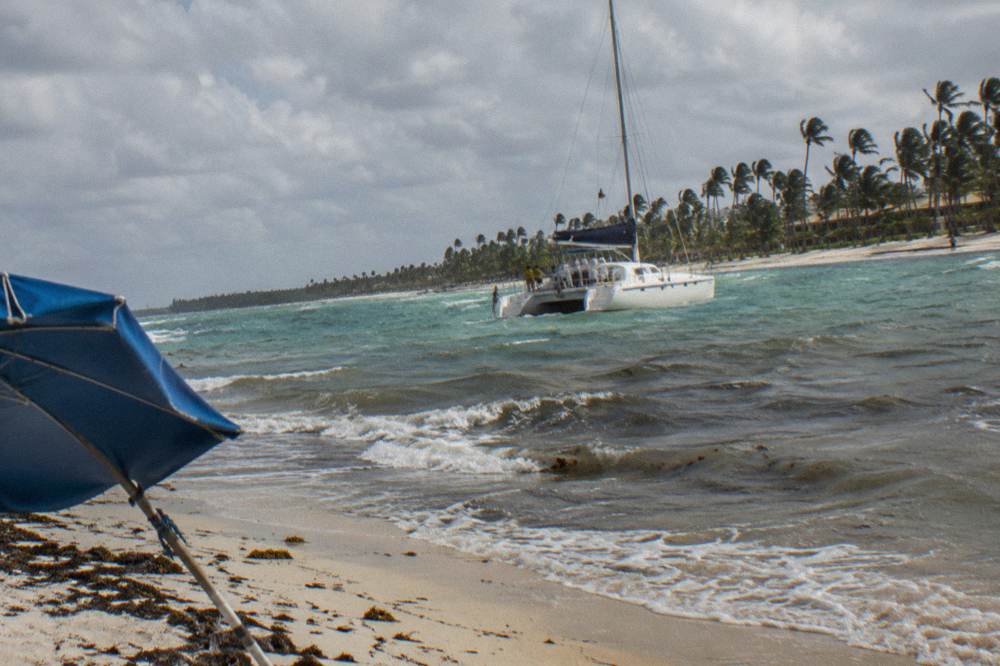
Boat trips are cancelled for safety reasons, not for seaweed: high wind, rough seas or an approaching tropical system. Operator policies on current listings typically offer a full refund or credit when the operator cancels for unsafe conditions, while tours often run rain or shine otherwise. Sargassum on its own is not a cancellation trigger.
The Atlantic hurricane season runs from 1 June to 30 November, as the NOAA National Hurricane Center's climate page sets out, and Punta Cana sits inside that window every summer and autumn. A named storm anywhere near the island is rare for any given week, but the season does raise the odds of blustery days. The distinction travelers miss is that rain, even a heavy tropical shower, rarely stops a party boat; sustained wind and rough seas do, because they make boarding, snorkeling and the natural pool stop unsafe. Whether a trip sails is always the operator's call under the listing's own cancellation terms.
On the money side, the tours are strongly traveler-friendly: free cancellation applies to nearly every trip, from the $59 sand-bar booze cruise with 1,320 reviews to the $698 private half-day snorkel charter rated 5.0 from 340 reviews. Two exceptions show "free cancellation not stated", both from the same operator, LPC Tours: the shared 4-hour booze cruise and the private water-slide cruise. If a weather-flexible booking matters to you, check the listing's terms before choosing one of those two. The full picture on timing is in hurricane season and Punta Cana boat tours, and month-by-month guidance sits in the best time for a Punta Cana boat trip.
Weather-versus-weed at a glance:
| Condition | Do trips usually run? | What changes |
|---|---|---|
| Sargassum at the beach | Yes | Stops may shift along the coast or natural pool |
| Passing rain shower | Usually yes | Party continues; deck gets wet |
| High wind, rough seas | Operator decides | Possible reschedule or refund per listing terms |
| Named storm warning | No | Operator cancels, refund or credit per policy |
Late-day formats are a quiet hedge against blustery mornings: the sunset party cruise from SeaPro Divers, 4.7 from 174 reviews at from $89 per person, gives the sea a full afternoon to settle before departure, and its 50-guest cap keeps the ride calm.
What Are The Authorities And Operators Doing About It?
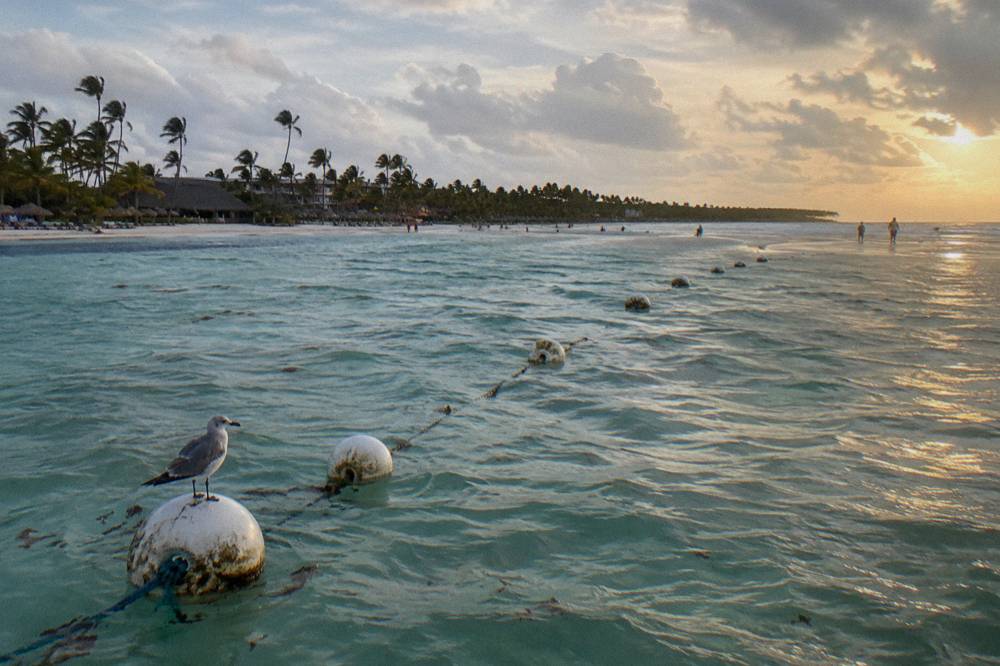
The Dominican navy has buoyed the navigation channel to the Bavaro natural pool to organize boat traffic around the busy sandbar area, and the same authority issued a 2025 ordinance setting minimum safety requirements for all tourism vessels. Beach cleanup, raking and barriers are handled resort by resort along the strand, while operators adjust routes stop by stop.
In January 2026 the Armada de la Republica Dominicana, together with Fundacion Los Arrecifes de Bavaro and the Ministry of Tourism, completed the buoying of the navigation channel serving the natural pool zone off Bavaro, with the stated aim of ordering vessel traffic and reducing incident risk for bathers and boats in the area. Every natural-pool party trip below, from the $49 adults-only boat with live DJ to the private charters, works that zone, so the channel markings are part of your day whether you notice them or not. Separately, the Armada's Port Captaincies issued Ordenanza CDP06-2025, setting minimum safety requirements for fishing, recreational and tourism vessels under Dominican jurisdiction.

On the water, the practical response to weed is routing. A listing for the King of Kings VIP party boat describes its sandbar dance stop and snorkel gear in a format that moves with conditions; the Happy Fish small-group catamaran, capped at 27 guests, describes its floating bar stop in waist-deep water at the sandbar. Small groups reroute fastest, which is one reason travelers nervous about conditions often pick the $83.66 small-group food catamaran, 4.8 from 465 reviews, over a 100-guest shared boat.
How Do You Pick A Boat Trip When Seaweed Is Possible?
Pick a format that lives offshore: a catamaran with a natural pool or reef stop, a small-group trip that can reroute quickly, or a full-day Saona crossing from the sheltered Bayahibe side. Book with free cancellation, check the sea a day or two before, and treat beach sargassum reports as background noise rather than a verdict on your trip.
The decision tree is short. If your dates fall between May and August and clear water is the priority, choose a Saona full-day trip, since the crossing leaves the Atlantic coast entirely: options run from $60 per person for the catamaran excursion with lunch to $169 for the 10-hour small-group luxury catamaran from Bayahibe hotels. If you want the party-boat afternoon format, the open-bar listings that cruise the Bavaro coast and stop at the sandbar are the resilient choice, because the sandbar sits offshore and the party happens on board regardless. If you want flexibility above all, small caps win: 25 to 27 guests on the smallest shared listings against 200 on the largest hip hop boat.
| If the forecast says... | Strongest boat fits |
|---|---|
| Heavy weed on Atlantic beaches | Saona full days: catamaran buffet trip, $71.20, 4.4 from 4,767 reviews |
| Clear water, fixed summer date | Open-air catamaran party boat, from $54, 4.8 from 67 reviews |
| Small group, quick reroutes | Happy Fish catamaran, up to 27 guests, from $83.66, 4.8 from 465 reviews |
| Adults-only party regardless of sea | Live DJ hip hop boat, from $65, 4.6 from 1,888 reviews |
| Calm-water family afternoon | Catamaran adventure, minimum age 4, from $54 |
Two habits do most of the work. First, read the listing's own cancellation line before booking, since terms live on the operator's page and vary by product, as the LPC Tours pair above shows. Second, judge the sea 24 to 48 hours out, not weeks ahead, because wind can clear or flood a stretch of coast inside a single afternoon. For what to pack once the date is set, the packing and outfit guide for Punta Cana party boats covers towels, reef-safe sunscreen and the rest.
The Saona catamaran day with buffet lunch is the most-booked escape from Atlantic conditions, with hotel pickup, open bar, and both a speedboat and a catamaran leg over 8 hours.
For a summer afternoon closer to home port, the small-group food catamaran carries at most 27 guests, includes a stand-up paddleboard and restroom on board, and can shift its snorkel and sandbar stops as the water dictates.
A final note on expectations. Seaweed is the sea being the sea: some years are heavy, some weeks are clean, and the same beach can look different on Tuesday than it did on Monday. What the record shows is that Punta Cana's boat fleet sails through nearly all of it, the authorities have marked the channels it uses, and the satellite watchers at the USF Sargassum Watch System report the belt shrinking as autumn deepens. Book the trip, keep the cancellation terms, and let the crew pick the clear water. If a storm system is what worries you, NOAA's hurricane season climatology is the primary source on what the season window does and does not mean.
Common Questions About Sargassum And Sea Conditions In Punta Cana
What Is Sargassum And Why Does It Reach Punta Cana?
Sargassum is a floating brown seaweed carried westward across the tropical Atlantic by currents and trade winds. Punta Cana and Bavaro face east onto the open Atlantic, so arriving mats land there first, while the Bayahibe and Saona coast to the south is more sheltered.
When Is Sargassum Season In Punta Cana?
Typically from around April or May through October on the Atlantic coast, with the heaviest accumulation usually between May and August. Late September and October bring the seasonal taper, and November through March are normally the clearest months.
Do Party Boats Get Cancelled Because Of Seaweed?
Sargassum alone is not a cancellation trigger. Operators describe shifting snorkel or natural pool stops when weed drifts over a site, and trips keep running through the season. Cancellations come from high wind, rough seas or storm systems, per each listing's own terms.
Which Beaches Are Most Affected By Sargassum?
East-facing Atlantic beaches: Macao, Uvero Alto, and the long Punta Cana and Bavaro strand. Cap Cana's coves vary with wind, and Bayahibe plus Saona Island on the south-facing coast are generally the least affected.
Is It Still Worth Booking A Boat Trip In Sargassum Season?
Yes, with the right format. Offshore-focused trips like catamarans with natural pool stops, small-group options that can reroute, and full-day Saona crossings from Bayahibe tolerate weed well, and nearly every trip on this page shows free cancellation if conditions truly turn.
Most operators offer a refund or credit when they cancel for unsafe weather or sea conditions, and nearly every trip below comes with free cancellation. Check the specific listing's terms before booking, since two listings do not state free cancellation.Can I Get A Refund If My Boat Trip Is Cancelled?