Do You Have To Pay $20 To Leave The Dominican Republic?
The US$20 Dominican Republic departure tax is already inside your airline ticket fare, so most visitors pay nothing extra at the airport. Here is how it works, plus the free e-Ticket you complete before you fly.
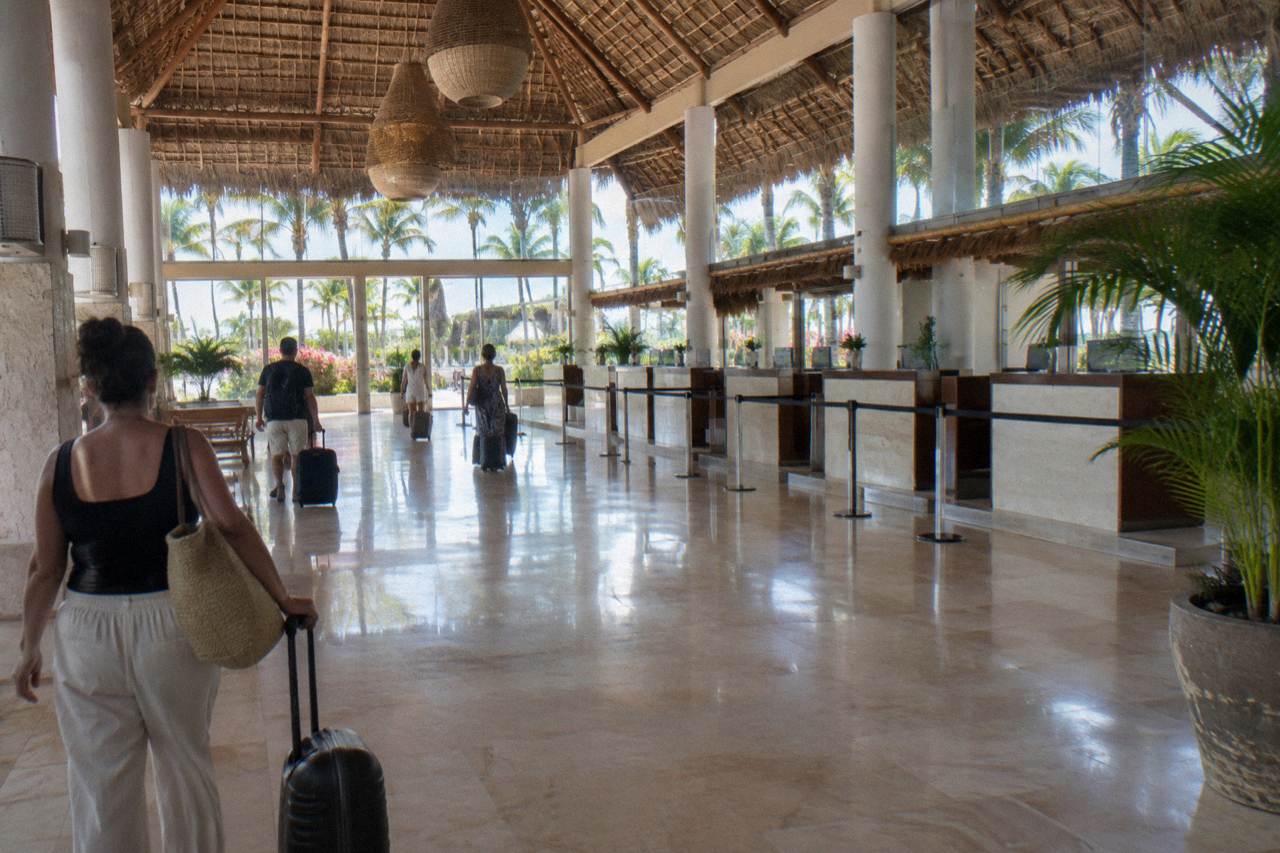
The question shows up in trip-planning forums every week, usually phrased with a small worry attached: is there a cash desk at the airport where you have to pay to leave the country? The short answer is no for almost everyone flying commercially. The US$20 departure contribution is collected by the airlines and built into the ticket fare, so you settle it when you buy your ticket, not when you leave. What you do need before you fly is the country's free digital entry and exit form, the e-Ticket, which is mandatory and also costs nothing. To fill out the e-Ticket correctly the first time and confirm your passport qualifies, our guide to Dominican Republic entry requirements walks through the form and the current rules in plain terms.
No, not at the airport and not in cash. The official tourism authority states the departure tax is US$20 per person and is already included in the airline ticket fare, so passengers on commercial flights pay it when they buy their ticket. There is no separate exit desk for tourists on scheduled flights. The only required paperwork at departure is the free e-Ticket form, completed online before you reach migration.
That single sentence resolves most of the confusion, but the details around it are worth understanding, because two other charges get tangled up with the departure tax in traveler chatter. One is the tourist card, a US$10 entry tax that has also been folded into air tickets issued outside the country since April 2018, per the Dominican tax authority. The other is the e-Ticket, which is free and is sometimes mistaken for a paid visa or fee because migration staff scan its QR code on the way out. None of these add up to a surprise cash payment at the gate for a typical visitor from the US, Canada, the UK or the EU.
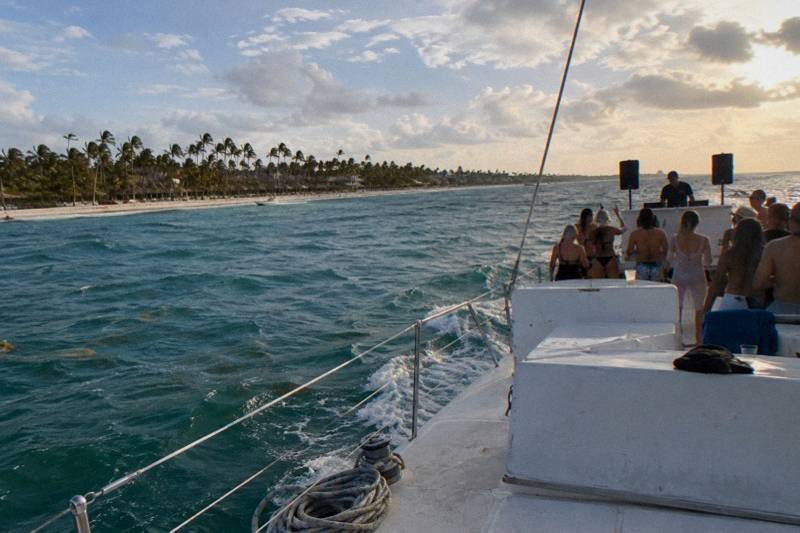
If you are already booked and counting days, the practical read is this: your fare covered the exit charge, your fare covered the entry tax, and the one thing left on your checklist is a five-minute online form. That leaves your budget free for the fun line items, and a party catamaran afternoon is a very typical one. The Punta Cana party boat with snorkeling, open bar and hip hop lists from $58.50 per person for 3.5 hours with round trip transport from hotels across Punta Cana, Bavaro, Uvero Alto, Cabeza de Toro and Cap Cana, a detail worth reading on the tour's own page.
The verified source for the $20 figure is the official Dominican Republic tourism site's entry requirements page, which lists the departure tax, the passport rules and the e-Ticket in one place. It is the page to recheck before any trip, because amounts and rules can change and the fare breakdown on your own booking confirmation is the final word on what you already paid.
Where Does The $20 Actually Get Paid?
The US$20 is paid inside your airline ticket fare, not at a counter. Airlines act as collection agents for the Dominican government, so the amount is bundled into the taxes-and-fees section of the price when you book. On commercial departures from Punta Cana or Santo Domingo, travelers simply check in and board; no separate cash or card transaction for the exit charge takes place at migration or the gate.
Look closely at any ticket receipt for a flight out of the Dominican Republic and you will find the line buried among the airport and security charges. That is the whole mechanism. The system has worked this way for years, which is why travelers who expected an exit fee desk report back that nobody ever asked them for money. People connecting through the country on a quick international transit generally do not formally enter, so their situation differs, but that edge case does not apply to anyone who stayed and enjoyed the coast.
A related charge confuses people in the other direction. The tourist card, a US$10 single-entry tax, has been included in air tickets issued outside the country since April 2018 according to the Dominican tax authority's tourist card page. So the entry-side tax is also sitting in your fare. Between the two, the ticket you already bought has settled both borders. The table below puts the three exit-related items side by side so nothing gets double-counted in your head.
| Item | Amount | How it is paid | Who pays at the airport |
|---|---|---|---|
| Departure tax | US$20 | Included in the airline ticket fare | Nobody on commercial flights |
| Tourist card (entry) | US$10 | Included in tickets issued outside the country since April 2018 | Nobody holding such a ticket |
| e-Ticket form | Free | Completed online at eticket.migracion.gob.do | Nobody; it is a form, not a fee |
One caution: figures like this do change from time to time when laws are updated. If you see a headline about a new departure charge, check your fare breakdown and the official tourism site before assuming anything extra is due, and ignore anyone quoting an unconfirmed number. The verified figure on the official page today is US$20 in the fare.

With the money question settled, the last thing worth budgeting is time rather than cash, and the hours before a night flight are exactly when a boat trip fits. A shared party catamaran keeps the cost low and the logistics simple, and the adults-only Punta Cana hip hop party boat with unlimited drinks runs 4 hours from $65 per person, 4.9 from 327 reviews, with round-trip hotel transport listed and free cancellation on the listing.
How The Free E-Ticket Works When You Leave
The e-Ticket is a mandatory, free digital form that every passenger on a commercial flight must complete before passing migration, both on arrival and on departure. One form can cover up to seven family members, and it generates a QR code that migration staff scan. It is completed at eticket.migracion.gob.do, the only official site, and it replaces any paper card system.
This is where a large share of airport friction comes from, because travelers arrive at departure migration without the QR code and have to complete the form on their phones while the queue builds behind them. The form asks for personal data, passport number, flight details, your accommodation address and a customs declaration for adults. Doing it at the hotel the night before, with your passport and flight number in hand, takes minutes and removes the stress entirely. The official e-Ticket portal is the only place to do it, and the migration authority confirms there is no charge for the service.
Two practical notes from the official guidance. First, the form is required in both directions, so keep the QR code from your arrival submission or complete a fresh one for departure, since the system asks for your flight details in each case. Second, passengers on private flights, ferries, cruise ships and non-commercial vessels are handled differently and do not need the form, but that exemption never applies to anyone flying home on a scheduled airline.

A useful habit is to treat the e-Ticket like a boarding pass: something you sort the evening before, screenshot, and keep reachable offline. Airport wifi can be slow at peak departure waves, and a screenshot of the QR code has saved many travelers from re-filling the form at the counter. Families should also note that one submission covers up to seven members traveling together, so a single well-prepared person can handle the whole household.
What If You Stay Longer Than 30 Days?
Visitors entering visa-free for tourism typically receive up to 30 days. Staying beyond that carries an extension fee payable at departure, charged by migration according to the length of the overstay. The official tourism site confirms both the 30-day standard stay and the extension fee, so budget for it only if you deliberately or accidentally pass the 30-day mark.
For a week-long trip built around a couple of boat days, this never comes into play. It matters for snowbirds and long-stay remote workers. The extension is not a penalty in the way an overstay fine is in some countries, but it is a real cost, payable online or at the airport, and the amounts scale with time. Check the official entry requirements page before a long stay rather than relying on forum figures, since fee schedules get revised.
Passport validity is the other long-stay consideration. The standard rule asks for six months of validity, but an exceptional measure running to 31 December 2026 lets nationals of the US, Canada, the UK, EU countries, Brazil, Chile, Argentina, Colombia and Ecuador enter for tourism with a passport that is simply valid for the stay and the return. If your passport expires in four months, you are fine under the current measure, but recheck the official page closer to your travel dates, since the measure has a defined end date and extensions are announced rather than assumed.
Can You Spend Money At The Airport Instead? Duty-Free Allowances
Yes, and this is where leaving can genuinely cost you, by choice. Adults arriving in the Dominican Republic may bring in duty-free up to 5 liters of alcohol, 20 packs of cigarettes or 25 cigars or 200 grams of tobacco, and gifts or goods up to US$500, once every three months. What you can carry home is set by your own country's customs. Cash above US$10,000 must be declared. These are customs allowances, not fees.
The rum counter at Punta Cana airport is the classic last stop. Adults arriving in the Dominican Republic may bring in up to 5 liters of alcohol duty-free, but what you can carry home depends on your own country's customs. A bottle or two of aged Dominican rum, some mamajuana, cigars in the sealed box: all well under the caps. The declaration side matters mainly if you are carrying substantial cash or commercial quantities of anything, and the e-Ticket's customs section is where adults declare it.
The distinction to hold onto is simple: allowances limit what you can carry without paying duty, while the departure tax is a charge you already paid in the fare. Nobody at the airport will ask you for $20 on the way out. Someone might ask to scan your e-Ticket QR code, which is why the form, not the money, is the part of departure worth preparing.
Fitting One Last Boat Day Before You Fly
A departure-day boat trip is usually a mistake, but the day before an evening flight works well. Shared party cruises run 3 to 4 hours, full-day Saona trips run 7 to 11 hours, and hotel pickup times are set the day before, so the deciding factor is your flight time and how far your hotel sits from the dock.
The reason the night-before slot is the sweet spot is mechanical. Most party boats sail in the morning or early afternoon, and with round-trip hotel transport included on nearly every shared listing, you are back at your resort with hours to spare before an evening check-in for the airport. The Sunny Adventures hip hop party catamaran is a 3.5-hour format that fits this window neatly, with pickup coordinated across the main hotel zones.
Full-day options need more runway. The Saona Island catamaran and speedboat tour to a dream beach runs 7 to 11 hours with a complete buffet lunch on the beach, open bar and a natural pool stop, from $89 per person, 4.3 from 325 reviews. Save that for the middle of your week, not the eve of departure. The Punta Cana Party Boats homepage comparison lays out the shared, private and full-day formats side by side if you are still deciding, and our best time for a boat trip guide covers the seasonal angle, including what hurricane season and sargassum actually mean for sailing.

Whatever you choose, book the things that matter before your final 48 hours, when availability tightens and cancellation windows close. Every listing highlighted here shows free cancellation on its page, which pairs well with the exit-tax reality: the flight is paid, the form is free, and the only open question is how you spend the afternoons that remain. A morning on the water, an afternoon by the pool, and an evening QR-code scan at migration is a farewell sequence that costs exactly nothing extra at the airport.
Common Questions About Leaving The Dominican Republic
Do You Have To Pay $20 To Leave The Dominican Republic?
No, not as a separate airport payment. The US$20 departure tax is already included in your airline ticket fare, so you paid it when you booked the flight. The only required step at departure is the free e-Ticket form.
Where Do I Complete The E-Ticket?
At eticket.migracion.gob.do, the only official site. It is free, one form covers up to seven family members, and it generates the QR code that migration scans on arrival and departure.
Is The Tourist Card Still Separate From The Departure Tax?
Both are now folded into air tickets issued outside the country. The US$10 tourist card has been included since April 2018, and the US$20 departure tax sits in the fare as well.
What Happens If I Stay More Than 30 Days?
Stays beyond 30 days carry an extension fee payable at departure, scaled to the length of stay. Standard visa-free tourist entry covers up to 30 days.
How Much Rum Can I Bring Into The Dominican Republic Duty-free?
Adults arriving in the Dominican Republic may bring in duty-free up to 5 liters of alcohol plus goods up to US$500; what you can carry home is set by your own country's customs. Cash over US$10,000 must be declared.
Do I Need Six Months Of Passport Validity?
The standard rule asks for six months, but a measure running to 31 December 2026 lets nationals of the US, Canada, the UK, EU countries and several Latin American countries enter for tourism with a passport simply valid for the stay and departure.