Is Snorkeling In Punta Cana Worth It?
An honest look at reef quality, water visibility and sargassum on Punta Cana snorkel trips, plus the party boats that include snorkeling.
Yes, for most visitors snorkeling in Punta Cana is worth it, as long as you set the right expectations. The reefs are shallow and still recovering rather than world class, but the water is warm, fish are plentiful along the Bavaro reef line, and a snorkel stop adds almost nothing to the cost of a party boat day that already includes one.
The honest framing matters, because the two camps reviewing Punta Cana snorkeling online talk past each other. One group arrives expecting the second coming of the Great Barrier Reef and leaves disappointed. The other groups jump off a catamaran for 30 minutes, see sergeant majors and parrotfish over coral heads in waist-deep water, and rate the day five stars. Both experienced the same sea. The difference is what they came for.
What Punta Cana actually offers is convenience. Nearly every party boat here lists snorkeling equipment and a guided swim stop in its inclusions, so the snorkel is bundled with the things people actually book for: the open bar, the music, the natural pool. If you are weighing a dedicated snorkel excursion against a party boat that includes one, the snorkeling boat tours guide breaks the formats down stop by stop.
One example of how the bundle works: the Punta Cana Party Boat Cruise with Snorkeling, Open Bar & Natural Pool, a 3 hour 30 minute catamaran trip for up to 25 guests, lists a snorkeling stop with equipment, a visit to Bavaro's natural pool, an open bar with alcoholic and non-alcoholic drinks, snacks, fresh fruit and round-trip transport from selected Bavaro hotels, from $59 per person. The snorkel is one act in a three-act day, and that is exactly why it works.
What Are The Reefs And Marine Life Actually Like?
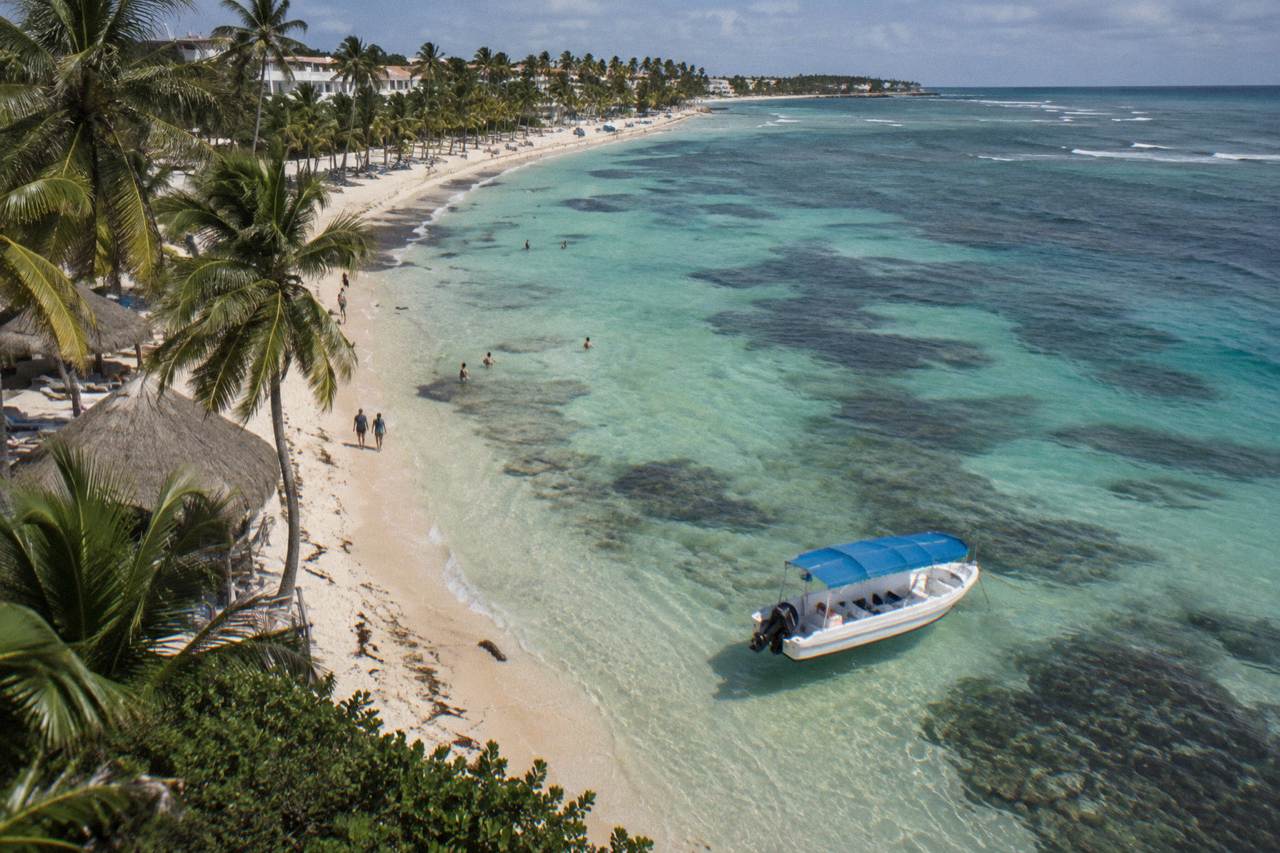
Punta Cana's snorkeling happens on shallow fringing reefs and seagrass patches off the Bavaro coast, typically in water shallow enough to stand in places. Expect colorful tropical fish, sergeant majors, parrotfish, blue tangs and the occasional ray or nurse shark near reef structure, rather than dramatic walls or large pelagics. The coral itself is patchy: healthy heads sit next to storm-damaged zones, and no tour listed here promises any specific sighting.
The marine life you can realistically describe is the standard Caribbean shallow-reef cast. Snorkel stops on these cruises take place at coral reef sites, with equipment and guides included. Tours here, like the Punta Cana Booze Cruise with Snorkeling, Sand Bar, and Transfers, list snorkeling equipment and guided stops among the inclusions. What none of them will do, and what no honest preview should do, is promise a particular animal on a particular day. Fish move, wind stirs sediment, and a reef that was full of life on Tuesday can be quiet on Thursday.
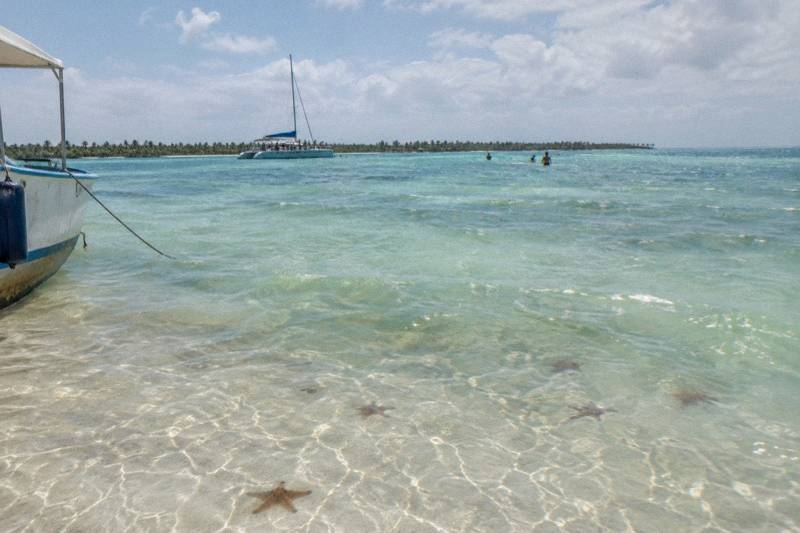
There is also a conservation line worth knowing before you get in. At Saona and the natural pool areas, park rules prohibit lifting starfish or touching marine life, and operators repeat this on board because handling starfish harms them. If a crew member tells you to look and not touch, they are enforcing a real rule, not being difficult. Reef-safe sunscreen is likewise encouraged or required by operator and park guidelines around reefs and the natural pools, so apply it before boarding and reapply after swimming rather than in the water.
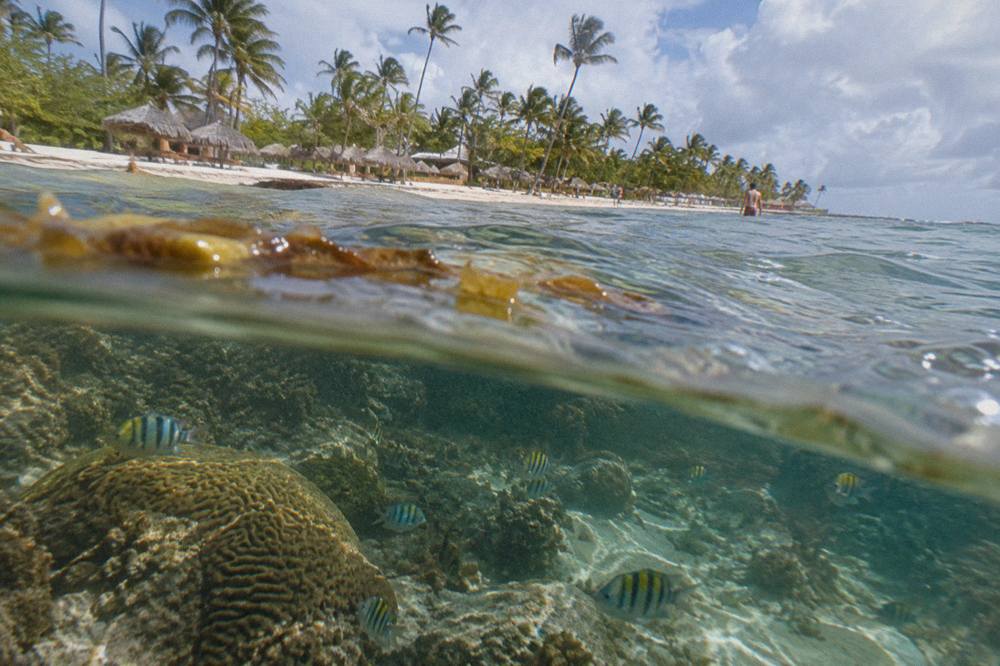
The other honest note is scale. Sites such as Marinarium style themselves as marine parks with controlled enclosures, while the reef stops on standard party boat routes are wild sites. Wild means variable. Some days the water over the Bavaro reef line is glassy and full of fish; other days a northeast swell cuts visibility to a few meters and the crew shortens the stop. The listing describes the stop; the sea decides the quality.
How Much Does Sargassum Affect Snorkeling Trips?
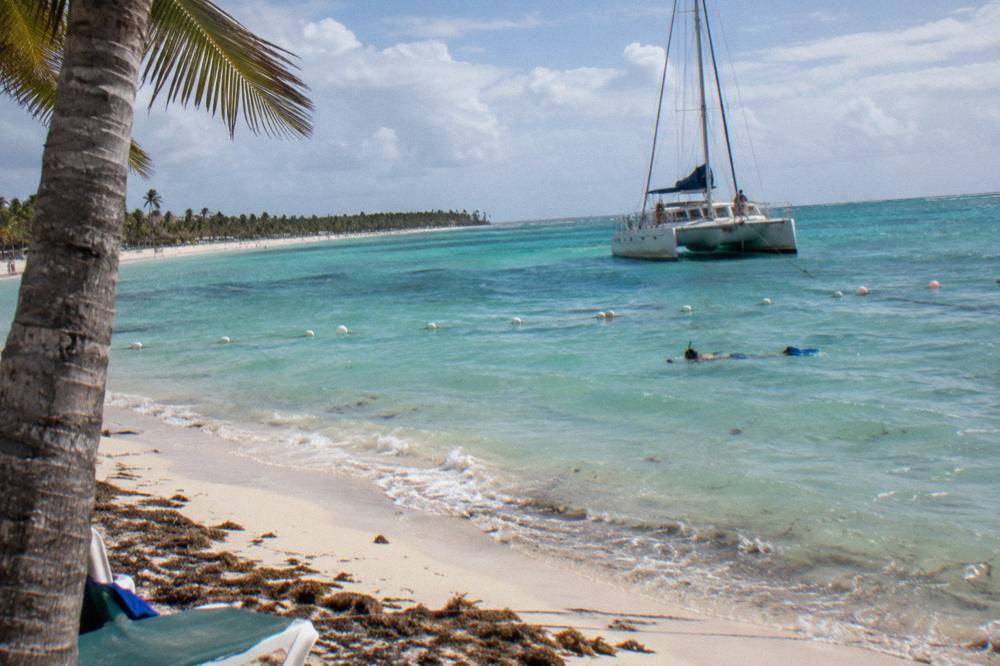
Sargassum is the single biggest variable in Punta Cana snorkeling quality, and it is seasonal. The east-facing Atlantic beaches accumulate seaweed mainly from April or May through October, with heaviest landings in summer, while the USF Optical Oceanography Lab reports that amounts declined in almost every region in September 2026 while staying relatively high for the time of year. Boats keep running; the experience at any given reef stop depends on wind and currents that week.
The mechanics are simple. Sargassum rides surface currents and piles up on east-facing coasts, which is exactly the orientation of Punta Cana and Bavaro beach. The Caribbean side around Saona Island and Bayahibe is generally more sheltered from the worst of it, which is one reason Saona trips keep their appeal late in the season. Live satellite trackers note that conditions on individual beaches can shift within hours with the wind, so a beach that was weedy in the morning can be clean by afternoon, and vice versa. The sargassum and sea conditions guide covers the seasonality in depth.
What this means for your booking decision is that the snorkel stop on a party boat is weather-and-sea contingent, and operators frame it that way. The Punta Cana Hip Hop Party Boat with Open Bar states plainly that snorkeling happens "if weather conditions allow it." That phrasing is not a dodge; it is how honest listings describe a stop that depends on sea state. Operators note that boat routes reach open water or specific stops where sargassum on the beach does not directly impact the trip, and the natural pool sandbars sit in spots that are often clearer than the shoreline.
If seeing fish is your main goal and you are traveling in the peak sargassum window, two tactics help. First, favor small-group or private formats, because a boat with 25 guests can reposition to the clearer side of a reef line faster than one with 100. Second, consider a trip that pairs the snorkel with something else you value, so a mediocre visibility day is still a good day. The PACKAGE DEAL listing that combines snorkeling, hooka diving and parasailing, from $140 per person for up to 15 guests with an open bar, is built exactly on that logic: three water activities, one booking, no single point of failure. Check availability if that mix suits your group.
Which Boats Have The Best Snorkel Stops?
The best snorkel setup depends on group size and what surrounds the swim. Small catamarans with 25 to 30 guests give calmer water at the reef and more guide attention, the Saona trips add a starfish natural pool to the reef experience, and the biggest party boats treat snorkeling as one quick stop of several. Every listing below includes snorkel gear in its inclusions; ratings and prices come from here.
The snorkel-carrying options here show the spread:
| Boat | Format | Duration | Price | Rating | Snorkel detail on the listing |
|---|---|---|---|---|---|
| Punta Cana Party Boat Cruise (Punta Cana Paradise Tour) | Shared catamaran, up to 25 guests | 3 hours 30 minutes | From $59 per person | 4.7 from 21 reviews | Snorkeling stop with equipment, Bavaro natural pool |
| Small-Group Catamaran (Happy Fish Catamarans) | Shared, up to 27 guests | 3.5 hours | From $83.66 per person | 4.8 from 465 reviews | Snorkel at a nature reserve, stand-up paddleboard included |
| Booze Cruise with Snorkeling and Sand Bar (Discovery Tours) | Shared, up to 100 guests | 3 hours | From $59 per person | 4.6 from 1,320 reviews | Snorkeling equipment, sand bar and natural pool stop |
| Hooka Diving and Parasailing Package (Power Adventures) | Shared, up to 15 guests | 4 hours | From $140 per person | 4.4 from 84 reviews | Snorkeling plus hooka diving and parasailing |
| Saona Island by Catamaran (Bizar Tour) | Shared day trip | 8 hours | From $60 per person | 4.0 from 93 reviews | 40-minute starfish natural pool stop, 3 hours on Saona beaches |
The pattern in the table is the article's answer in miniature. The 4.8-rated Happy Fish catamaran, up to 27 guests with a paddleboard and restroom on board, is the closest thing here to a snorkel-first trip, and its 465 reviews are a real sample rather than a handful. The Discovery Tours booze cruise is the opposite: 4.6 across 1,320 reviews from a boat of up to 100 people, where the snorkel is a chapter in a party book. Both are good products. They are good for different readers.
The Saona row deserves its own sentence, because it answers the snorkeling question differently. The Bizar Tour catamaran trip includes a 40-minute stop at the natural pool where starfish live, three hours of free time on Saona's beaches, an all-you-can-eat Dominican lunch and an open bar, from $60 per person. The Saona party catamaran tours guide compares the full-day options, and the natural pool and sandbar stops guide explains why those waist-deep stops are often where the best fish watching happens.
Is Snorkeling In Punta Cana Safe For Beginners?
Yes, for most beginners it is: the standard snorkel stops on Punta Cana party boats are shallow, sheltered areas where life jackets are available and crew are either in the water or watching from the boat. The real risks are ordinary ones, sun exposure, rough sea days, and swimming after drinking, and each has a simple fix: reef-safe SPF 30 or higher applied before boarding, a calm-water day, and snorkeling before you settle into the open bar. For the wider picture on boat rules and booking checks, our guide to Punta Cana excursion safety covers what Dominican authorities require of tour boats and what listings should tell you before you book.
On the regulatory side, the backdrop is more solid than most visitors realize. The Armada de la República Dominicana, together with the Fundación Los Arrecifes de Bávaro and the Ministry of Tourism, completed the buoying of the navigation channel to the Bavaro natural pool in January 2026, marking authorized routes to keep vessel traffic away from swimmers, as the official Armada announcement describes. The Armada also issued Ordenanza CDP06-2025 setting minimum safety requirements for tourism vessels under Dominican jurisdiction. Those markers in the water at the natural pool are not decoration; they are the channel your boat is required to respect, and they are a good reason to snorkel inside the marked areas rather than wandering toward them.
For practical comfort, the usual seasickness advice applies to any boat day: a light meal beforehand, medication the night before and morning of if you are prone, and sitting low and centered on the boat with eyes on the horizon if the swell picks up. None of this is Punta Cana specific, but on a 3 to 4 hour party cruise it decides whether the snorkel stop is a highlight or a trial. And the single best safety rule on a booze cruise is chronological: swim first, drink second. The legal drinking age in the Dominican Republic is 18, and several of these listings are adults-only or 18-plus by their own rules, but the swim-sober suggestion is just good sense regardless of your age.
When Is The Best Time Of Year To Snorkel Here?
The best snorkeling months around Punta Cana are typically December through April, outside the main sargassum accumulation window and outside the rainiest stretch of the year. October is the wettest month on average, with May close behind, and the seaweed season generally runs April or May through October with heaviest landings in summer. Sea conditions, not calendar promises, make the final call, and operators cancel or shorten for unsafe seas rather than push through.
The seasonal logic follows from the sargassum section above: the east-facing coast takes the weed during the warm months, and the quiet window aligns with the northern winter high season. That is also when the sea is at its calmest for small-boat trips, which improves visibility at the reef. The trade-off is crowds, since everyone else has read the same calendar. Late November and early December often split the difference, though no listing or official source on file promises clean water in any specific week, so treat that as tendency rather than rule.
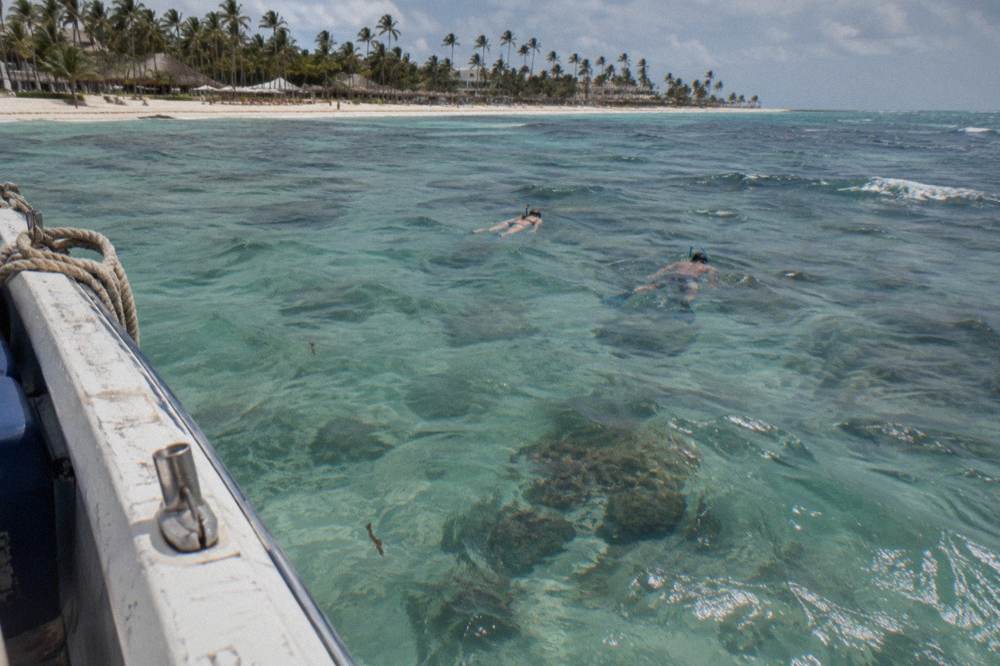
Within any given week, the time of day matters as much as the month. Morning departures usually find the flattest water before the afternoon trade winds pick up, which is why many full-day Saona trips run early hotel pickups. If snorkeling is the part of the boat day you care most about, book the earliest departure the listing offers. If the party is the point and the snorkel is a bonus, the afternoon boats are livelier and the sunset formats, like the Party Boat Cruise from Punta Cana operated by SeaPro Divers, 4.7 from 174 reviews at from $89 per person, close the day on the water instead. The best time for a boat trip guide works through the calendar month by month.
Snorkel Boat Or Something Else: How To Decide
Base your choice on what matters most: a snorkel-forward small catamaran if fish are the priority, a party boat if the overall day matters more, and a large booze cruise with a snorkel stop for a middle ground, which is also the cheapest entry point. Divers take note that none of these are dive trips; the hooka package is the closest option, and shared boats with snorkeling start at $49 per person.
The decision is mostly about what disappoints you least. If the water is cloudy on a small catamaran day, you have still had a calm intimate boat with good food and drinks. If it is cloudy on a booze cruise with 100 people, you have still had a party. The reader who books a fish-watching trip and gets a dance floor, or vice versa, is the one who writes the two-star review. Match the format to your actual reason for being on the water and both outcomes are fine.
One more consideration for groups splitting the bill: the price gap between the formats is small enough that it should not drive the choice. The cheapest snorkel-carrying shared trips here run from $49 to $69 per person, the small-group catamaran from $83.66, and the hooka-plus-parasailing package from $140. Here, the difference between the cheapest option and the most feature-packed works out to roughly the cost of a resort dinner. Buy the format, not the price point.
Whichever boat you choose, the honest summary from Punta Cana Party Boats is this: snorkeling here will not be the best 30 minutes of diving you have ever done, and it does not need to be. It is a warm, easy, well-supported swim over Caribbean reef life, folded into a day that already has music, drinks and a sandbar in it. Booked that way, it is very much worth it.
Common Questions About Snorkeling In Punta Cana
Is Snorkeling In Punta Cana Worth It?
Yes, for most visitors. The reefs are shallow and modest rather than world class, but the fish life is good, the water is warm, and on nearly every party boat the snorkel stop is included with the open bar, sandbar stop and hotel transfers you were already buying. It is best treated as one highlight of a boat day, not the whole reason for one.
Do You Need Experience To Snorkel In Punta Cana?
No. Standard stops are shallow and sheltered, and the listings include snorkel gear, life vests and crew supervision. Beginners should swim near the guide, wear a life jacket if unsure, and snorkel before drinking from the open bar.
When Is Sargassum Worst For Snorkeling In Punta Cana?
Sargassum typically affects the east-facing Punta Cana and Bavaro coast from April or May through October, with the heaviest accumulation in summer. The Caribbean side around Saona is generally more sheltered. Conditions can shift within hours with the wind, and boat routes often reach stops clearer than the beach itself.
Can You Snorkel From The Beach In Punta Cana Or Do You Need A Boat?
Boat trips reach the better reef areas, and nearly all tours listed here include gear, guide and transfers in the price. Shore snorkeling exists along Bavaro but quality depends on the day's conditions and the seaweed situation, which is why most visitors snorkel as part of a catamaran or party boat excursion.